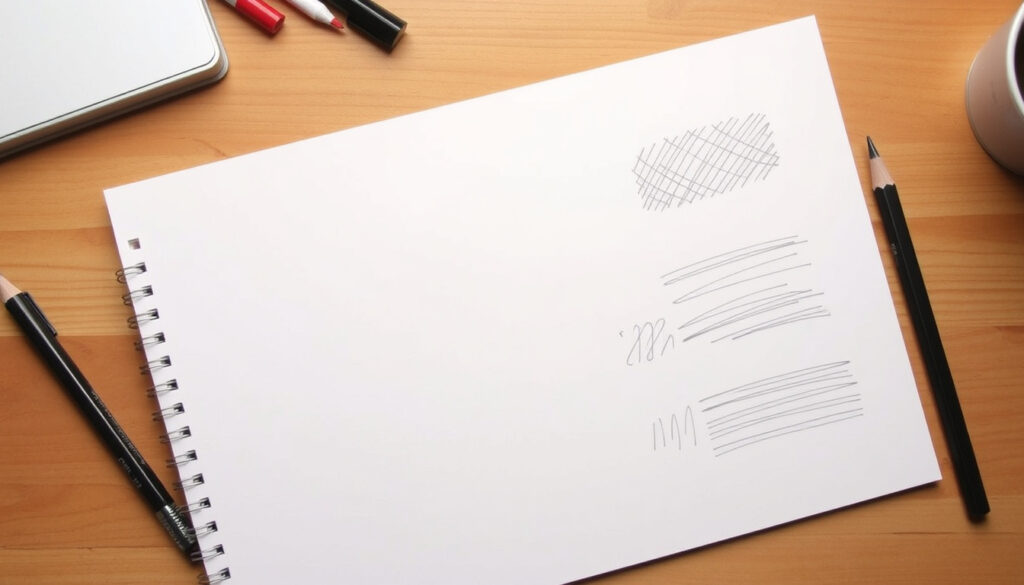
Easy Line Drawing: Techniques, Types, and Ideas for Beginners
Staring at a blank page, pencil in hand, most people freeze before making the first mark. That single line—simple as it seems—is where every drawing, doodle, and sketch begins, and mastering it is simpler than most people think.
Simple line drawing images on Shutterstock: 2,367,870 ·
Freehand line drawing techniques: 7 ·
Basic types of lines in drawing: 5 ·
Drawing ideas list for beginners: 100
Quick snapshot
- The five basic line types are vertical, horizontal, diagonal, curved, and zigzag (Adobe Creative Cloud (line art guide))
- Shutterstock hosts over 2.3 million simple line drawing images (Adobe Creative Cloud (line art guide))
- The exact number of line types varies by art curriculum
- Whether ADHD correlates with drawing preference is not scientifically established
- Adobe and Clip Studio both published updated line-drawing guides in late 2023–2024 (Adobe Creative Cloud (art guide))
- More structured online courses are moving line drawing instruction into short daily drills (The Virtual Instructor (online art school))
The numbers behind line drawing reveal why it remains the most accessible form of visual art.
| Attribute | Value | Source |
|---|---|---|
| Stock images available | 2,367,870 | Shutterstock |
| Pins on ‘Simple Lines’ board | 380 | |
| Freehand line drawing techniques | 7 | The Design Sketchbook (drawing tutorial blog) |
| Basic line types | 5 | Adobe Creative Cloud (graphic design platform) |
| Drawing ideas | 100 | Compiled from multiple sources |
How to draw a line in a simple way?
Simple line drawing techniques for beginners
Drawing a line sounds trivial, but the first step is choosing a tool that makes a clear mark. Any pencil, pen, or marker works—the trick isn’t the instrument but the intention. Adobe Creative Cloud (graphic design platform) describes line art as crisp and well-defined, meaning simplicity comes from clarity, not complexity.
- Choose your tool — an HB pencil and standard printer paper work best for beginners.
- Draw a straight line from left to right using your shoulder, not your wrist.
- Repeat the straight line drill for two minutes, focusing on smooth, consistent motion.
- Draw a curved line, then a broken line, connecting each into basic shapes.
- Practice overlapping lines at different angles to build hand control and confidence.
For the absolute beginner, a standard HB pencil and printer paper are all you need. The first line you draw is a straight one—the simplest mark possible. Skillshare (online learning platform) recommends starting with straight-line drawings before moving to curves.
Using basic shapes to create lines
Lines form the edges of shapes. Practice by drawing a straight line, then a curved one, then a broken line. Drawabox (drawing fundamentals course) emphasizes smooth, confident lines as the building block of control. Connect these into squares and circles—you’ve already created a drawing.
How to draw a line freehand?
Freehand line drawing tips
Drawing without a ruler requires retraining how your arm moves. The Design Sketchbook (drawing tutorial blog) lists seven ways to draw straight lines freehand, and the most powerful tip is swapping wrist motion for shoulder motion. When you lock your wrist and move from the shoulder, lines become straighter almost immediately.
- Draw from the shoulder, not the wrist — helps maintain a steady line (The Design Sketchbook (art tutorial site))
- Practice ghosting: hover the pencil over the paper to trace the path before making contact
- Draw toward your body rather than away — improves lineart control (Clip Studio Tips (digital art resource))
New beginners often press too hard, thinking pressure equals precision. The opposite is true. Skillshare (online learning community) notes that light, quick lines produce cleaner results. Speed helps: slow lines wobble.
How to draw straighter lines without a ruler
Five minutes a day of straight-line drills rewires hand-eye coordination. The Virtual Instructor (online art school) recommends short daily exercises for confident lines. Draw parallel lines of equal length across a page. Then repeat in the opposite direction. Over time, the wobbles vanish.
What are the 5 basic types of lines?
Five line types form the foundation of all visual art. Every drawing, from a child’s doodle to a master’s sketch, uses combinations of these five. Carrie L. Lewis (artist and drawing instructor) explains that line drawing basics help artists capture a subject quickly and accurately.
Vertical lines
Vertical lines run straight up and down. They convey height, strength, and structure—think of a tree trunk or a standing figure.
Horizontal lines
Horizontal lines run left to right. They suggest calm, width, and stability—the horizon line in a landscape.
Diagonal lines
Diagonal lines cut across the page at an angle. They create movement, tension, or direction—a sloping roof or a falling leaf.
Curved lines
Curved lines bend smoothly. They indicate softness, flow, or organic shapes—a river, a smile, a cloud.
Zigzag lines
Zigzag lines alternate direction sharply. They signal energy, chaos, or sharp edges—a lightning bolt or a broken edge.
Knowing these five types gives you a vocabulary. A beginner who can name and draw each one can decode any more complex drawing into manageable parts. The Postman’s Knock (calligraphy and art tutorial site) notes that closer lines create darker areas, a principle you can apply immediately with these five basic types.
The implication: mastering these five line types gives any beginner a complete visual vocabulary for breaking down complex subjects into manageable elements.
What are the top 10 easiest things to draw?
Easy subjects for beginners: circles, squares, simple objects
Certain subjects require only the five basic line types. The ten easiest things to draw are:
- Circle
- Square
- Simple flower (petals using curved lines)
- Star (diagonal and zigzag lines)
- Heart (two curved lines meeting)
- Tree (vertical line for trunk, curves for canopy)
- Cloud (multiple overlapping curves)
- Sun (circle with short diagonal lines around it)
- House (square with diagonal roof)
- Fish (oval with a triangular tail)
Skillshare (creative learning platform) suggests starting with line art before adding shading or color, keeping each subject in its simplest outline form.
Continuous line drawing of simple shapes
Continuous line drawing—drawing without lifting the pencil—forces the eye to stay connected to the subject. Start with a circle, then a square, then a flower. The exercise trains fluidity. Drawabox (foundation drawing curriculum) uses superimposed lines and ellipses as core drills, directly supporting this approach.
What to draw 100 ideas?
List of 100 drawing ideas
Drawing ideas fall into categories that make generating 100 possible. Organize by theme and each category yields 15–25 ideas. For inspiration beyond line drawing, check Sandnes Garn oppskrifter barn – gratis mønstre for pattern-based creativity.
- Nature (25 ideas): tree, leaf, flower, cloud, sun, moon, star, mountain, river, rock, wave, lightning, rainbow, raindrop, snowflake, grass, mushroom, pinecone, seashell, cactus, palm tree, bird, butterfly, fish, whale
- Objects (25 ideas): cup, mug, spoon, fork, plate, bowl, bottle, vase, lamp, candle, book, pencil, scissors, key, clock, phone, glasses, hat, shoe, umbrella, backpack, chair, table, bed, window
- Characters (25 ideas): smiley face, stick figure, cat, dog, rabbit, elephant, lion, monkey, owl, penguin, robot, alien, ghost, pumpkin, witch hat, superhero, princess, pirate, astronaut, chef, firefighter, baby, old man, girl with braids, boy with cap
- Patterns (25 ideas): stripes, polka dots, checks, zigzags, spirals, concentric circles, wavy lines, scallops, diamonds, honeycomb, scales, herringbone, basketweave, crosshatch, starburst, mandala, Celtic knot, chevron, lattice, brick wall, tile pattern, feather pattern, floral repeat, repeating hearts, geometric grid
The Virtual Instructor (online drawing resource) notes that practicing these ideas helps improve line control and builds confidence. For those interested in Scandinavian design aesthetics that often rely on clean lines, see By Malene Birger – Skandinavisk design og bohemsk eleganse.
How to overcome artist’s block with 100 ideas
Running out of things to draw stalls progress. Having a categorized list eliminates the blank-page paralysis. Pick one category, draw the first five items using only the five basic line types, and repeat tomorrow with five more. The Design Sketchbook (art improvement blog) recommends daily drills that include overlaps and pressure changes, ensuring each idea becomes a skill-building exercise.
youtube.com, reddit.com, practicedrawingthis.com, youtube.com
Frequently asked questions
Do people with ADHD like to draw?
Some anecdotal reports suggest individuals with ADHD find drawing calming, but no scientific study has established a direct correlation. The repetitive, focused nature of line work may appeal to those seeking a structured creative outlet. However, this claim remains unproven by research.
What is the best pencil for line drawing?
An HB pencil offers a middle ground between hard and soft lead, making it the standard recommendation for beginners. For darker lines, try a 2B; for lighter, finer lines, use an H.
Can I learn line drawing online?
Yes. Multiple platforms offer structured courses: Skillshare, Drawabox, and The Virtual Instructor all provide free or low-cost lessons focused on line fundamentals. Drawabox (fundamental drawing course) offers a complete lesson one on lines at no cost.
How long does it take to master line drawing?
Most instructors recommend 15–30 minutes of daily practice for 30 days before noticeable improvement. The Virtual Instructor (art education site) emphasizes that short, consistent drills produce confident lines faster than long, irregular sessions.
What is the difference between line drawing and sketch?
A line drawing uses clean, defined lines to outline a subject, often without shading. A sketch is a rougher, more exploratory drawing that may include construction lines, erasing, and shading.
Is line drawing suitable for kids?
Yes. The simplicity of line drawing makes it ideal for children. Drawing the five basic line types and simple subjects like a circle, square, or star develops fine motor skills and visual thinking.
What are the benefits of continuous line drawing?
Continuous line drawing improves hand-eye coordination, trains the eye to stay with the subject, and reduces hesitation. Skillshare (online learning community) recommends it as a warm-up exercise before tackling more complex projects.
Flere relaterte innlegg
 Kong Carl Gustav – Sveriges Lengst Regjerende Monark
 145 lbs til kg: Hvor mange kilo er 145 pund? | Fakta og guide
 200 euro til norske kroner – dagens kurs og veksling
 FINN.no bolig til salgs Bergen – slik finner du riktig bolig
 Skolen Cappelen Damm – Feide-innlogging og LK20-ressurser
 Moss Avis nyheter – komplett guide til lokalavisen
 Hårkur best i test 2026: Topp 5 og kjøpsguide
 Real Madrid vs Celta Vigo – Forhåndsvisning og prediksjon